

Plot
Avatar: Fire and Ash arrives with a heavier promise than spectacle alone. This third chapter in Avatar’s long arc is positioned as the emotional and ideological hinge of James Cameron’s Pandora saga. Where Avatar was about first contact and Avatar: The Way of Water explored adaptation and belonging, Fire and Ash turns inward. It interrogates fracture, rage, and the consequences of survival when harmony fails.
Cameron has been explicit that this film introduces a more morally ambiguous Na’vi culture, often described as the “Ash People,” a clan shaped by volcanic landscapes rather than forests or reefs. That environmental shift is not cosmetic. It reframes Pandora from Edenic ideal to contested territory. Fire, ash, and scorched earth become metaphors for ideological extremism, grief weaponized into identity, and the seductive clarity of anger.
Jake Sully’s arc continues away from savior mythology toward reckoning. His leadership is no longer about resistance against humans alone, but about preventing Na’vi-on-Na’vi annihilation. Neytiri, long the emotional compass of the franchise, reportedly occupies darker territory here, her grief from The Way of Water hardening into something volatile. Cameron is less interested in balance this time and more interested in what happens when balance collapses.
The human presence on Pandora persists, but Fire and Ash reframes humanity less as singular villain and more as accelerant. The real conflict becomes ideological contagion. What does survival look like when the tools of domination are adopted by the oppressed themselves?
Episode Consistency
From a franchise continuity perspective, Fire and Ash is a deliberate tonal departure while remaining structurally consistent. Cameron maintains his signature long-form narrative patience, world-building density, and ecological allegory, but the emotional temperature is notably higher.
Where Avatar (2009) leaned into colonial critique and The Way of Water explored family, migration, and resilience, Fire and Ash occupies a more uncomfortable register. It resembles Cameron’s earlier fascination with escalation seen in Terminator 2: Judgment Day and even the class tensions of Titanic, where human systems implode under pressure.
This is the first Avatar film that does not primarily function as an invitation. It is a warning. That makes it the riskiest entry yet, but also the most narratively ambitious.
Acting
Cameron’s ensemble approach finally pays off here. Sam Worthington’s Jake Sully has matured into a quieter, burdened performance. Gone is the wide-eyed Marine discovering a new world. In its place is a leader struggling with the unintended consequences of myth-making.
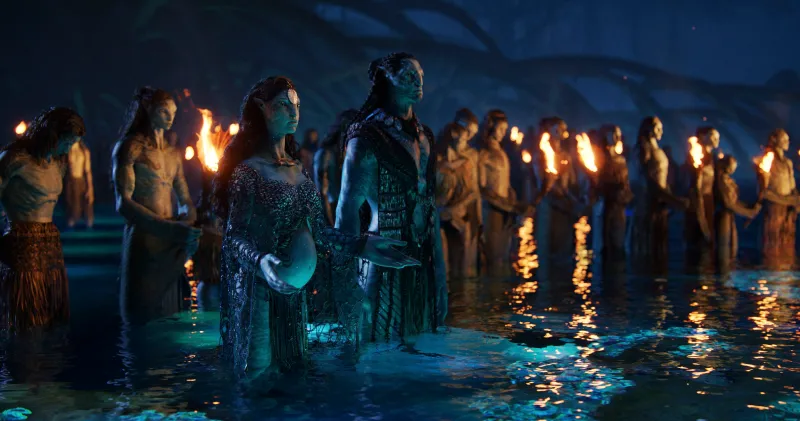
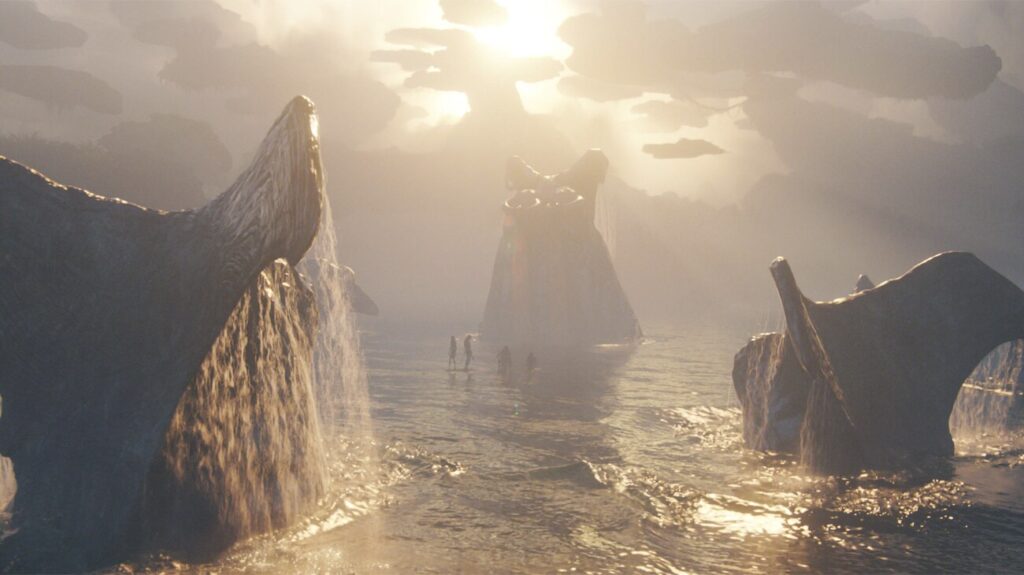



Zoe Saldaña reportedly delivers the film’s emotional core. Early reactions consistently point to Neytiri’s arc as the most intense and divisive element of the film. Saldaña leans into ferocity, grief, and moral rigidity, offering a performance that challenges audience allegiance rather than reassuring it.
Sigourney Weaver continues her fascinating dual role within the franchise, embodying both continuity and evolution. Her presence grounds the film’s spiritual dimension, acting as a counterweight to its more destructive impulses.
Stephen Lang’s Colonel Quaritch remains one of Cameron’s most interesting villains, not because of originality, but because of persistence. His arc increasingly mirrors Pandora’s corruption. He is no longer an outsider force. He is an infection that adapts.
New cast members associated with the Ash People bring a rawness that contrasts sharply with the grace of the Omaticaya and Metkayina. Their performances reportedly prioritize intensity over elegance, reinforcing the film’s thematic rupture.
Directing
This is James Cameron at his most confrontational. James Cameron has never been subtle, but Fire and Ash dials back awe in favor of unease. The camera lingers less on beauty and more on consequence. Long takes emphasize destruction, not as spectacle, but as erosion.
Cameron’s direction here feels closer to his early work than his recent operatic tendencies. There is a sense that he is using Avatar’s technological dominance to ask harder questions rather than simply raise the bar again. The action sequences are reportedly brutal, kinetic, and less choreographed for elegance. Victory feels costly. Survival feels conditional.
Music
Simon Franglen, continuing the legacy of the late James Horner, composes a score that leans heavily into percussive tension and choral dissonance. Where The Way of Water flowed, Fire and Ash burns.
The music does not guide emotion so much as provoke it. Critics who have responded to early footage and score previews describe it as intentionally abrasive, prioritizing thematic discomfort over melodic recall. It works in service of the story, even if it sacrifices standalone memorability.
Cinematography
Pandora has never looked less forgiving. Volcanic biomes dominate the visual language, with obsidian blacks, molten reds, and ash-filled skies replacing bioluminescent blues and greens. The visual contrast is startling and effective.
Cameron’s continued use of high-frame-rate experimentation remains divisive, but here it arguably serves the material better. The hyper-clarity makes destruction feel immediate and unavoidable. Fire behaves like a character, not an effect. Ash obscures depth and distance, reinforcing the film’s thematic claustrophobia.
This is not a screensaver movie. It is a pressure cooker.
Comparisons to Other Science Fiction
Fire and Ash shares DNA with films that interrogate ideology rather than technology. It echoes the moral gray zones of Dune: Part Two, the ecological despair of Blade Runner 2049, and the internalized conflict of Children of Men.
Unlike Marvel-style universe building, Cameron’s approach remains singularly authored. There are no winks, no safety valves. The film trusts its audience to sit with discomfort, a rarity in contemporary blockbuster cinema.
By The Numbers
As of the latest aggregation, Avatar: Fire and Ash is shaping up as one of the most critically divisive but audience-beloved entries in the franchise.
On Rotten Tomatoes, the film currently holds a 61% critics score, signaling mixed-to-polarized professional reviews. Critics tend to praise the film’s technical mastery, world-building, and thematic ambition, while expressing reservations about its darker tone, movie length, and emotional density.
In sharp contrast, audiences have embraced the film, giving it a 91% audience score. Viewer reactions consistently highlight emotional payoff, visual spectacle, and character arcs, particularly Neytiri’s, as resonant and powerful. Many audience reviews frame Fire and Ash as the most emotionally engaging Avatar film to date, even if it is less “pleasant” than its predecessors.
This gap between critics and audiences mirrors Cameron’s past releases. Titanic, Avatar, and even The Way of Water all faced early skepticism before cultural momentum reframed them as audience-driven phenomena rather than critic-led darlings.
If anything, these numbers reinforce what Fire and Ash is doing differently. This is a film that challenges critics with its discomfort while rewarding audiences willing to emotionally invest. 🔥
Final Thoughts
Avatar: Fire and Ash is not interested in comfort. It challenges the franchise’s own mythology, interrogates righteous violence, and dares to make Pandora ugly in service of truth. Cameron risks alienation to earn relevance, and that gamble largely pays off.
This is the Avatar film that asks what happens after the revolution, when ideals harden and survival turns inward. It may not be the one audiences expected, but it is the one this saga needed. 🔥🌋
External Links
Official Avatar site
IMDb Avatar franchise page
Rotten Tomatoes Avatar hub
20th Century Studios press materials
Leave a Reply