VU SCORE
85
There is a very specific kind of excitement happening right now in music technology. AI is no longer just generating novelty songs, it is starting to creep into the actual mechanics of production. ACE Studio 2.0 sits right at the center of that shift, positioning itself not as a toy, but as a serious tool that can live inside a real workflow.
That positioning is bold, and for once, not entirely marketing fiction. But it also creates tension. ACE Studio is at its best when it behaves like an assistant, and at its worst when it tries to replace a complete studio.
“It feels less like cheating and more like having a very fast, slightly unimaginative collaborator who never gets tired.”
Over the past year, AI music tools have split into two camps. On one side you have pure generation platforms like Suno and Udio that focus on instant gratification, turning text into finished songs with very little control. On the other side, you have tools like ACE Studio that attempt to integrate into the actual production process, where MIDI, arrangement, timing, and performance still matter.
ACE Studio clearly belongs to the second category. It is trying to solve a harder problem, which is not how to create a song instantly, but how to accelerate the process of making one. That difference shapes everything about the experience. It also explains why so many surface level reviews feel overly positive. They judge it like a generator, when it should be judged like an instrument.
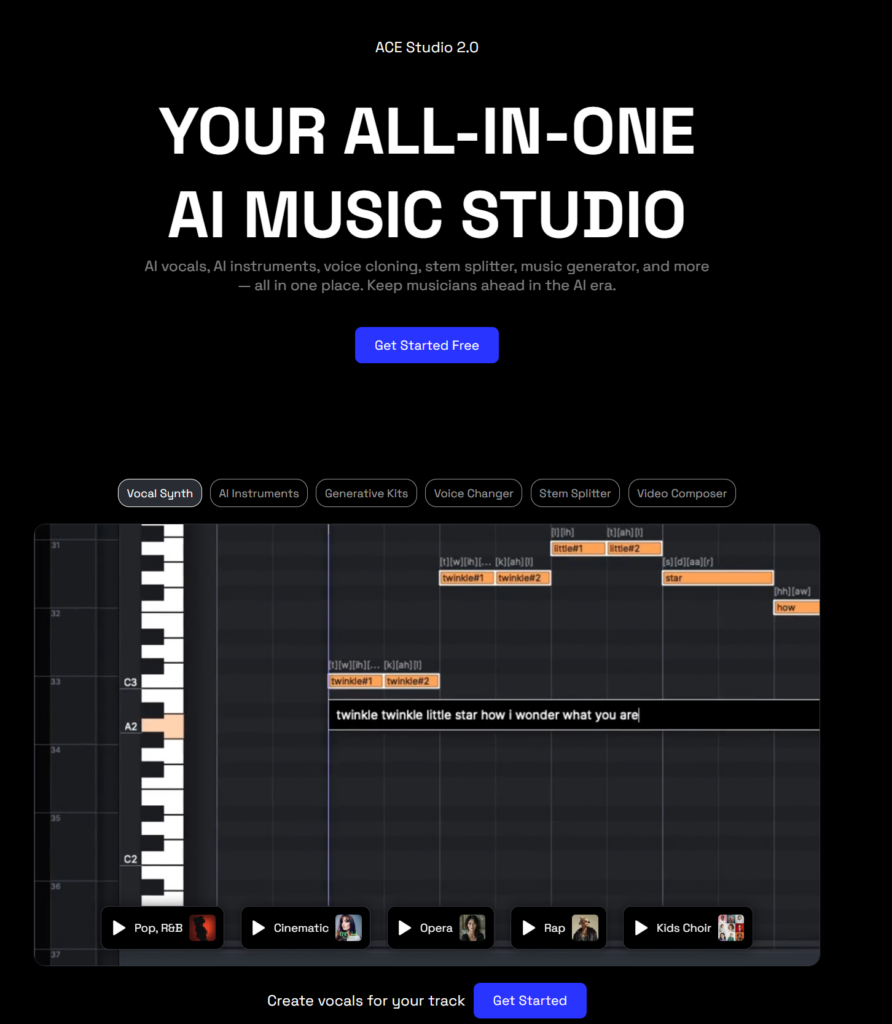
The strongest argument for ACE Studio is not its generative capabilities, it is its ability to produce convincing performances from structured input. When you drive the system through MIDI and lyrics, the vocal engine can produce results that are surprisingly usable for real production scenarios such as demos, harmonies, and even certain lead vocal contexts.
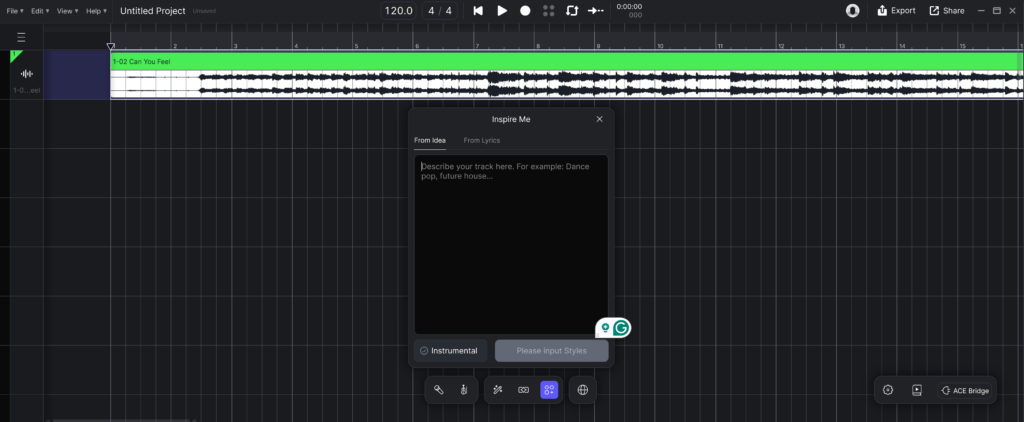
What stands out is not just tonal quality, but phrasing. The introduction of parameters like breath, chest tone, and power creates a layer of expressiveness that moves beyond the robotic feel that defined earlier vocal synthesis tools. This is where ACE begins to differentiate itself from traditional vocoders or earlier vocal engines.
The instrument side is arguably even more interesting. By applying similar modeling principles to orchestral and solo instruments, ACE introduces subtle timing inconsistencies and pitch imperfections that make performances feel less quantized and more human. For producers who have spent years manually adjusting velocity curves and microtiming, this feels like a meaningful shift.
However, fidelity collapses quickly when you step outside controlled conditions. Fully generated songs tend to sound polished but generic, with arrangements that follow predictable patterns and lack distinctive identity. Complex vocal styles such as fast rap or extended falsetto still expose the limitations of the model, often resulting in artifacts or unnatural phrasing. Voice cloning remains inconsistent, occasionally impressive but just as often unusable depending on the training data and input quality.
The conclusion here is clear. ACE Studio delivers high fidelity when you guide it, and average results when you let it drive.
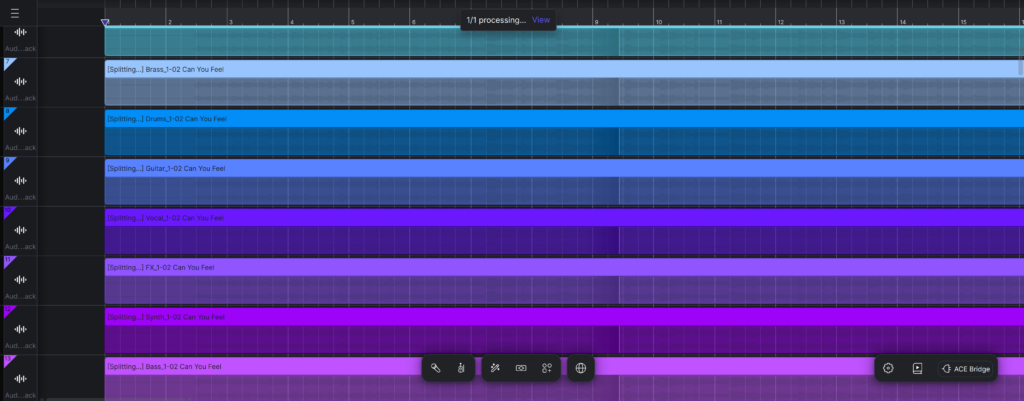
The most confusing aspect of ACE Studio is not what it does, but what it wants to be. The Canvas interface introduces a timeline based environment that resembles a DAW, complete with MIDI tracks, audio clips, and arrangement capabilities. At a glance, it looks familiar enough to anyone who has worked in FL Studio, Logic, or Ableton.
But that familiarity breaks down quickly. Core DAW expectations are missing or underdeveloped. There is no robust plugin ecosystem, the mixing environment is limited, and certain features like chord tracks do not meaningfully interact with the rest of the composition. These gaps create friction, especially for experienced producers who expect a certain level of depth.
Onboarding is another weak point. Despite the complexity of the tool, documentation is thin and often unclear, forcing users to experiment or search externally to understand basic workflows. This is particularly ironic for a platform that is supposed to accelerate creativity, as it often slows you down in the early stages.
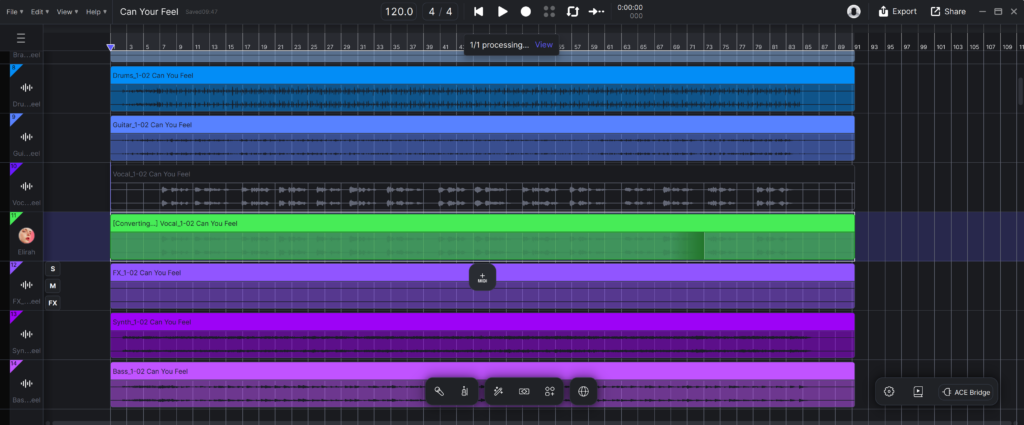
At the same time, there are moments where the workflow feels genuinely innovative. The ability to convert audio into MIDI and then immediately reinterpret that MIDI through AI vocals or instruments creates a fluid loop between idea and execution. This is not something traditional DAWs handle particularly well, and it hints at what a truly AI native production environment could look like in the future.
Ultimately, ACE Studio feels like a prototype for a new kind of DAW rather than a finished one.
Most AI music tools focus on composition, but ACE Studio’s real contribution lies in performance. Instead of trying to replace the act of writing music, it enhances the way music is expressed once it has been written.
This distinction is subtle but important. Composition involves decisions about melody, harmony, and structure. Performance involves timing, dynamics, articulation, and emotion. ACE Studio is significantly better at the latter than the former.
By embedding performance intelligence into its synthesis engines, ACE reduces the amount of manual editing required to make MIDI feel alive. It effectively compresses hours of detailed automation into a few parameters, allowing producers to focus more on creative decisions and less on technical adjustments.
This is where the platform begins to feel aligned with hardware-first workflows. It tightens the loop between idea and output, which is ultimately what most producers are chasing.
Despite being marketed heavily, the generative features are the least compelling part of ACE Studio. Tools like Inspire Me and Music Enhancer can produce interesting starting points, but they rarely generate material that feels finished or distinctive.
The system performs best when used in small segments rather than full compositions, which suggests that it struggles with long form structure and thematic development. Even when results are musically coherent, they tend to default to familiar patterns, particularly within mainstream pop and electronic genres.
Music Enhancer, which is intended to reinterpret existing material, remains inconsistent and occasionally fails outright. This reinforces the idea that ACE Studio is not yet ready to function as a fully autonomous creative system.
The reality is that generative AI remains a sketching tool, not a finishing tool. ACE Studio does not change that, it simply integrates it more deeply into the workflow.
One of the more important aspects of any AI music tool is how it handles ownership and licensing. ACE Studio positions itself as ethically trained, with voice and instrument models built from licensed recordings and compensated performers. This is a meaningful distinction in a space where many platforms operate in legal grey areas.
The platform also allows for royalty free use of its generated content, making it viable for commercial projects, at least within the boundaries of its terms. However, voice cloning introduces additional complexity, particularly around consent and likeness, which the tool does not fully abstract away.
From a practical standpoint, ACE Studio is safer than most AI music tools, but it is not risk free. Users still need to understand the legal implications of how they use generated content.
ACE Studio is most effective when used as a specialized tool within a broader production setup. It excels at generating demo vocals, creating harmonies and choirs, humanizing MIDI performances, and accelerating early stage ideation. Its stem separation capabilities are also strong enough to compete with dedicated tools, making it useful for remixing and analysis.
It is less effective as a standalone environment for full production or as a replacement for traditional DAWs. It also struggles in genres that require complex musical language or highly expressive performance.
This reinforces a simple truth. ACE Studio is not a studio replacement, it is a studio enhancer.
ACE Studio 2.0 represents a meaningful step forward in how AI can be integrated into music production. It moves beyond novelty and begins to address real workflow challenges, particularly around performance and iteration.
At the same time, it is held back by an identity crisis. By trying to be a DAW, a generative platform, and a vocal engine all at once, it dilutes its strengths and exposes its weaknesses.
The most effective way to use ACE Studio today is not as a replacement for your existing setup, but as a complement to it. Treated this way, it becomes a powerful and occasionally inspiring tool. Treated as a complete solution, it quickly reveals its limitations.
Audio Fidelity 7.3
Workflow and UX 6.5
AI Innovation 8.5
Generative Capabilities 6.8
Commercial Viability 7.0
Overall Rating 7.0 out of 10