

I saw Supergirl over the weekend. I knew it bombed at the box office. I knew the reviews were mostly negative. I love superhero movies, though I have always been more of a Marvel guy than a DC guy. Having said all of that, I was in the mood for it, my expectations were low, and I walked out more entertained than I expected to be. I also walked out with a notebook full of problems. Both things are true, and that tension is the whole story of this movie.
A little history first
Supergirl has never had it easy on screen. The very first live-action Supergirl was Helen Slater, in the 1984 film directed by Jeannot Szwarc. Slater was charming and completely committed, and the movie around her was a disaster. It grossed roughly $14 million against a $35 million budget and effectively killed the character theatrically for four decades. I finally watched it the afternoon after seeing the new one, and yes, it is awful. So awful that it makes the 2026 Supergirl look like freaking Shakespeare. You take your wins where you can get them.
Television treated her better. Laura Vandervoort had a nice run as Kara on Smallville, and Sasha Calle got a brief, moody turn in 2023’s The Flash. But the definitive Supergirl for a generation was Melissa Benoist, who carried six seasons from 2015 to 2021, first on CBS and then The CW. Benoist captured the warmth, the optimism, and the earnestness of the character better than anyone before her.
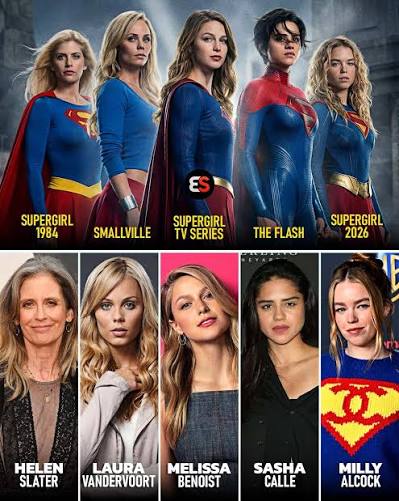
Milly Alcock is the definitive Supergirl for this generation. Full stop. Coming off House of the Dragon, she plays a different Kara than Benoist did: harder edged, angrier, funnier, a 23-year-old drinking her way across red-sun planets to numb the grief of watching Krypton die slowly. Alcock shifts between menace, comedy, and real vulnerability without ever losing the character’s core decency. She is the best thing in the movie by a wide margin, and she is the reason I believe this version of Supergirl has a future in the DC canon even though the theatrical run cratered. More on that below, because the afterlife of this movie has become its own story.
The people behind the camera
James Gunn and Peter Safran produced, but Gunn did not direct. That job went to Craig Gillespie, the filmmaker behind I, Tonya, Cruella, and Lars and the Real Girl. Gillespie is terrific with prickly, misunderstood protagonists, which is exactly why he made sense for this Kara, and the character work bears that out. What he has never done before is cosmic-scale spectacle, and it shows in stretches where the movie feels smaller than its premise.
The screenplay is by Ana Nogueira, a playwright and TV veteran adapting Tom King and Bilquis Evely’s acclaimed Woman of Tomorrow comic. The bones of that story are here: Kara, Krypto, and a vengeance-seeking farm girl named Ruthye chasing the brigand Krem across the galaxy. The adaptation is where the movie gets into trouble, and I will get to that.
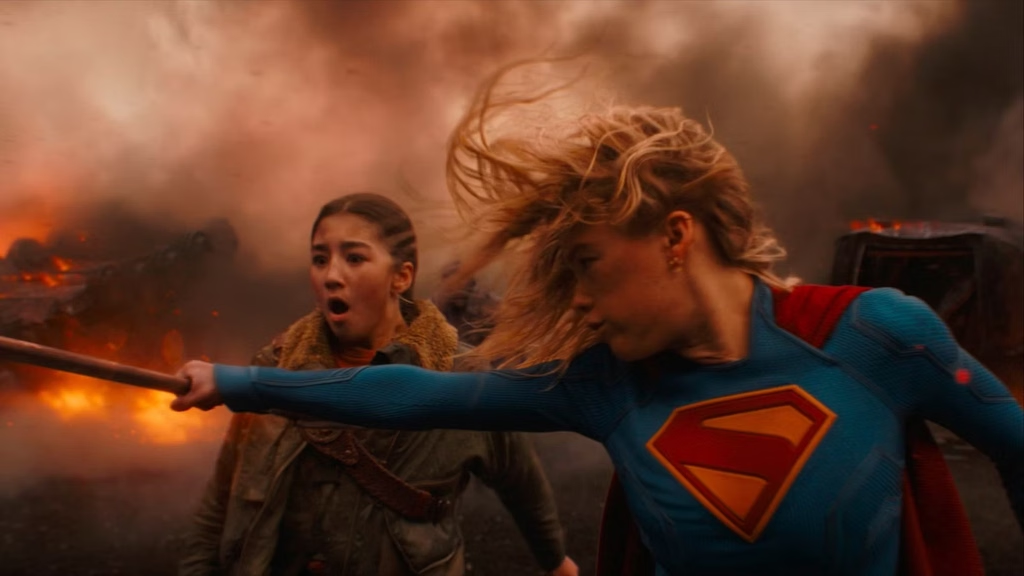
Rob Hardy shot it, and this is one of the more interesting conversations about the film. Hardy is the cinematographer behind Ex Machina, Annihilation, and Mission: Impossible Fallout, and he throws out the classic Super playbook entirely. The Richard Donner Superman films, and even Gunn’s own 2025 Superman, are bright, saturated, primary-color Americana: blue skies, red capes, sunlight as a character. Hardy’s Supergirl is a space western, all dusty frontier planets, neon dive bars, and murky alien light. It is a deliberate departure that fits Kara’s jaded arc, though some of it plays dim and murky on screen, and I missed the visual joy the House of El usually brings with it.
The music is where the Gunn DNA is most obvious. Claudia Sarne’s score is strong, and the needle drops are chosen and integrated with the same care Gunn brought to Guardians of the Galaxy. The film starts with real swagger because of it, and my spirits were genuinely lifted in the first act. My one gripe: the bar scene where an alien lounge singer, billions of miles from Earth, croons The Girl from Ipanema and another old Earth standard. Cute idea, zero logic, and it irked me.
The story and the spine
Less than twenty minutes in, the cracks start to show, and the cracks become chasms. The Brigands’ entire objective is abducting girls to continue their all-male species, yet they leave Ruthye standing right in front of them after slaughtering her family. And the film never addresses the queasier implication that they pass on 23-year-old Kara while taking only teens and preteens. The movie clearly does not want you thinking about that. I did, and it is a problem.
Kara’s driving motivation is saving Krypto, poisoned by Krem, and she is told the Brigands carry the antidote on their person. She then beats the daylights out of hundreds of Brigands, all carrying the antidote, without ever just taking one. A single line establishing that each poison is keyed to the individual Brigand’s DNA would have fixed this and made the chase genuinely urgent. Nobody wrote that line. Ruthye, meanwhile, has no powers and survives encounters that should have killed her a thousand times over, choking out enemies who are nearly at Kara’s strength level and navigating strange planets like a local. She survives and appears exactly when the plot needs her to, and for no other reason.

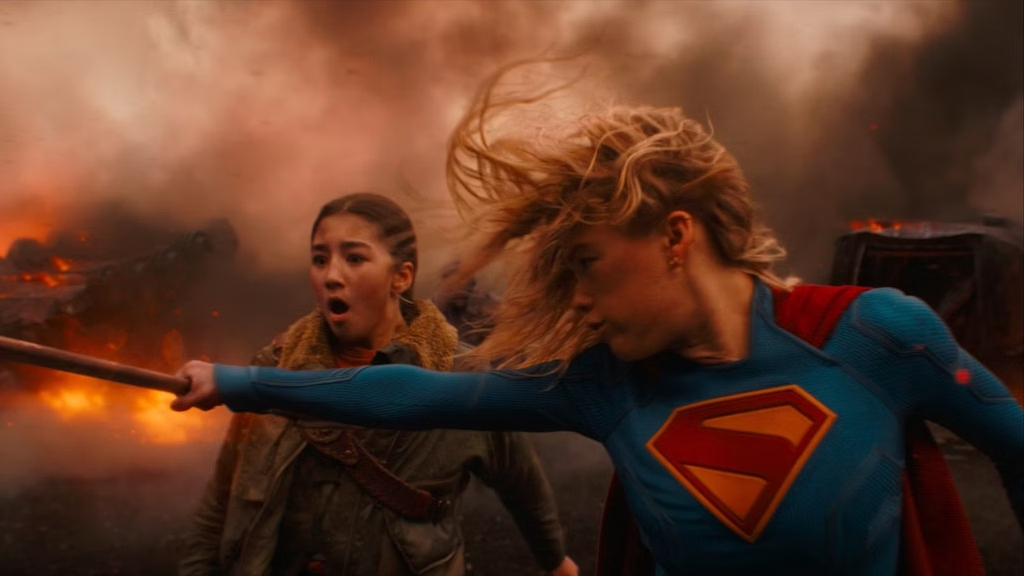
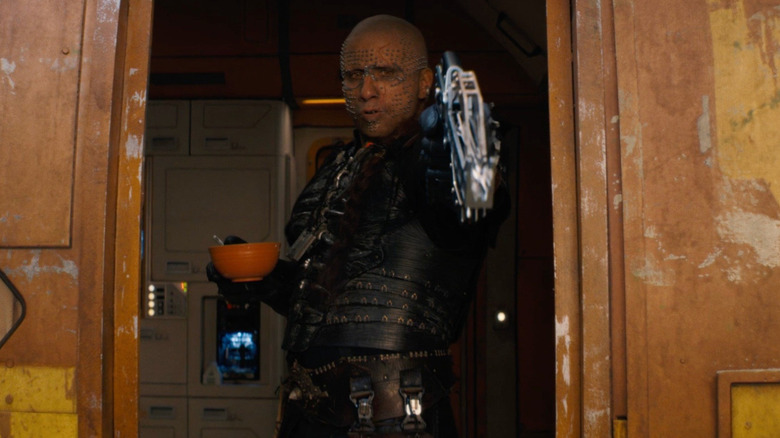
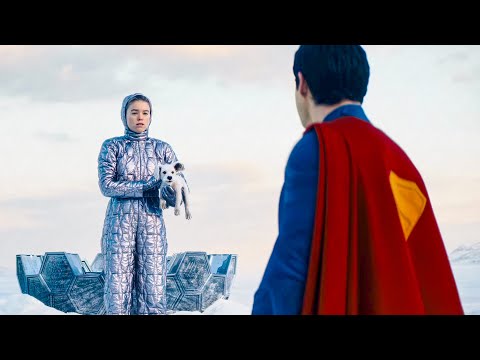
The mythology is sketchy too. The yellow-sun and red-sun rules are canon, but the green sun that nearly kills Kara in deep space is new, and inconsistent with her playing fetch with Krypto in space earlier in the film. And Krem, a backwater brigand, somehow knows all about Kryptonian weaknesses despite Kara and Kal-El supposedly being the last two survivors of a planet that died decades ago. Jason Momoa is perfectly cast as Lobo and clearly having a blast, but his presence affects the outcome of exactly nothing. He is there to wisecrack and sell tickets. Judging by the box office, it did not work.
The numbers, and the second life
The theatrical math is brutal. Supergirl opened June 26 to $37.1 million domestic, finished with $72.4 million domestic and roughly $54 million international for $126.4 million worldwide, and was out of theaters in about 40 days. Against a production budget in the $170 million range plus a reported nine-figure marketing spend, that is a heavy loss and a fraction of the $600 million plus that Superman delivered the summer before.
Then the movie went home, and the story flipped. Warner Bros. pushed it to digital on July 28, a tight 32 days after release, and the audience that skipped the theater showed up immediately. It debuted at number one on the Apple TV movie chart the day after its digital release, took the top spot on Fandango at Home’s weekly chart by knocking off The Mandalorian and Grogu, and has camped in the VOD purchase and rental top ten ever since, still holding the number two slot on Fandango in mid September after a price drop to $9.99. The HBO Max debut on September 10 completed the arc: within a week, chart trackers had it as the number one movie on the service worldwide, leading in the US, Australia, Brazil, Spain, and much of Latin America.
Now, streaming charts do not refund a theatrical loss, and any brand new title on a service gets a bump. But the pattern says something real. This was a fifteen dollar no in June and a ten dollar yes in August. People wanted to see this Supergirl, just not badly enough to leave the couch, and once the friction dropped, Alcock’s Kara found the audience the theatrical release never did. That is the shape of a movie that earns its place in the canon at home rather than on opening weekend, and DC should read it as a mandate for the character, not a verdict against her.

The verdict
Here is the thing: I was entertained. The movie moves, Alcock commands every frame, the music cooks, and the first act promises something special. The spine just is not strong enough to hold it up, and a script polish that closed three or four logic holes would have transformed this from a flawed watch into a good movie. Supergirl will be part of the DC Super-People canon, and it deserves to be, mostly on the strength of its star. Kara Zor-El finally got the right actress. Next time, get her the right script.
Leave a Reply